
Monastery on Time in Shaolin Temple Europe
Monastery on Time in Shaolin Temple Europe
Six days inside Shaolin Temple Europe’s “Monastery on Time” retreat — a physically demanding week that weaves together martial arts training, strict schedules, and quiet, often uncomfortable reflection.
This is my personal account of that time at Shaolin Temple Europe in Otterberg, Germany: documenting the rhythm, rituals, and lessons from arrival through the final meditation.
Note: This story is based entirely on my own experience and reflections. I used AI-based writing assistants to help make the language more fluent and to speed up editing, especially given the amount of material and my limited time.
Key Information
- Program: Monastery on Time
- Length: 6 days
- Location: Otterberg, Germany
- Focus: Discipline · Martial arts · Mindfulness
Daily Schedule
| Start | End | Activity |
|---|---|---|
| 07:00 | 08:00 | Meditation |
| 08:00 | 09:00 | Breakfast |
| 09:00 | 12:00 | Morning Sport |
| 12:00 | 13:00 | Lunch |
| 13:00 | 14:00 | Break |
| 14:00 | 16:00 | Labour |
| 16:00 | 18:00 | Tai Chi / Qi Gong |
| 18:00 | 19:00 | Dinner |
| 19:00 | 20:00 | Stretching |
| 20:00 | 21:00 | Evening Ceremony |
Day 1 - The Journey Begins
The decision to come here came shortly before New Year’s Eve, after watching countless videos of Shi Heng Yi, the temple’s headmaster. Many retreats were already fully booked, but Monastery on Time still had spots. It seemed perfect: intense physical training grounded in spiritual practice. The program description warned us repeatedly: this is physically demanding, and visitors often quit.
“Even better,” I thought.
On Monday, October 10th, I traveled from Mannheim Central Station to Kaiserslautern, then took bus 109 to Otterberg. Thanks to the Deutschland-Ticket, the entire trip was seamless. From Otterberg, however, I still had about 3.5 kilometers to cover. I later learned there’s a local bus that runs from the primary school to the monastery, but at the time, I didn’t know that. So I simply started walking.
As the town faded behind me, the proper sidewalk disappeared, leaving me to walk along the shoulder of a fast road, dragging my luggage behind me. Traffic was sparse, which was lucky. Eventually, a car slowed down, and the driver rolled down his window to ask where I was heading. Coincidentally, he was going to the monastery too and offered me a ride.
That’s how I met Justin-Manuel John—a Northern German giant, tall as a Viking and covered in Norse mythology tattoos, currently serving in the Army. We arrived a good hour early, around 11:45, and stepped onto the monastery grounds. Others were already there, waiting. We started chatting, making awkward but friendly introductions, before being promptly hushed and ushered away from the main gates.
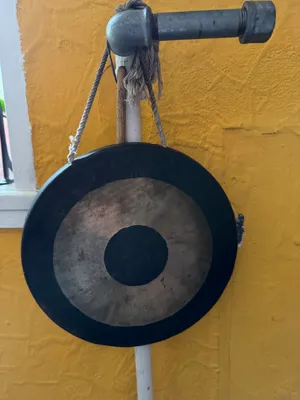
At exactly 1:00 PM, a gong sounded three times. The invisible walls of the monastery opened.
More than twenty of us rushed into the front yard. A short welcome followed, and we were quickly paired up to register and collect bed sheets. The administrative requirements had seemed serious: every participant was told to bring two mandatory documents. First, a liability agreement acknowledging the extreme physical demands, medical risks, and strict non-refund policy. Second, a medical certificate confirming “uneingeschränkte Belastbarkeit”—unrestricted physical resilience. In other words: a doctor’s note promising you wouldn’t break. In the end, though, nobody actually checked. The documents we had carefully prepared went unexamined.
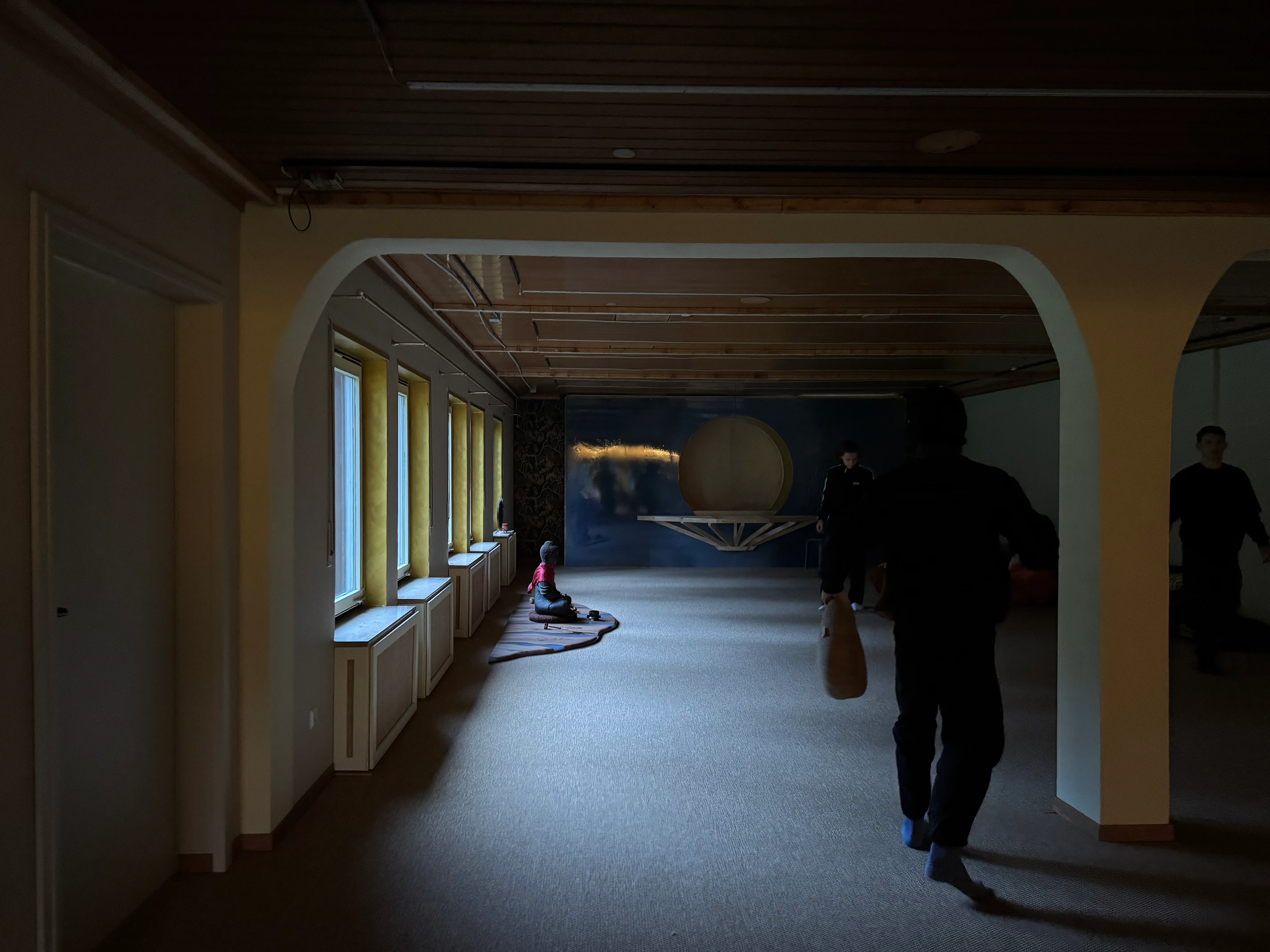
Since our group was too large for the temple dormitories alone, some participants had to stay in nearby Otterberg. At 2:00 PM, we all gathered in the Buddha Hall—the largest and most imposing hall on the grounds—for our formal introduction.
By 3:00 PM, the first sports session began. It lasted until 5:30 PM and was divided into three relentless blocks:
- Stretching
- Running
- Strength & Resistance
The uphill running was … demanding. If you weren’t used to running, you suffered immediately. Most of the group struggled to keep pace with our coach, a monk disciple named Lee.
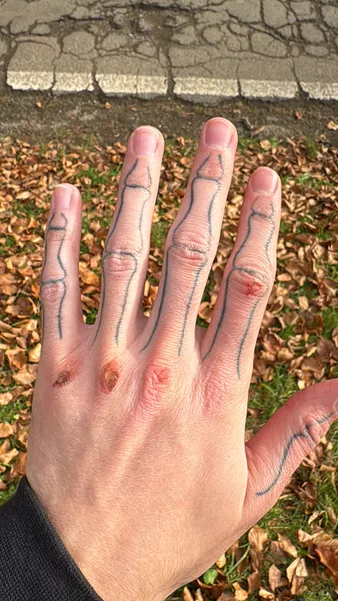
Then came the strength training. We were ordered to crawl on our fists in a push-up position, hovering low to the ground. The terrain was just sand—but our “baby knuckles” weren’t used to it. With every step, the grains ground into our soft skin. It hurt. I knew I was getting cut, but I had no idea how bad it was until later, as the sand coated the wounds, masking the damage.
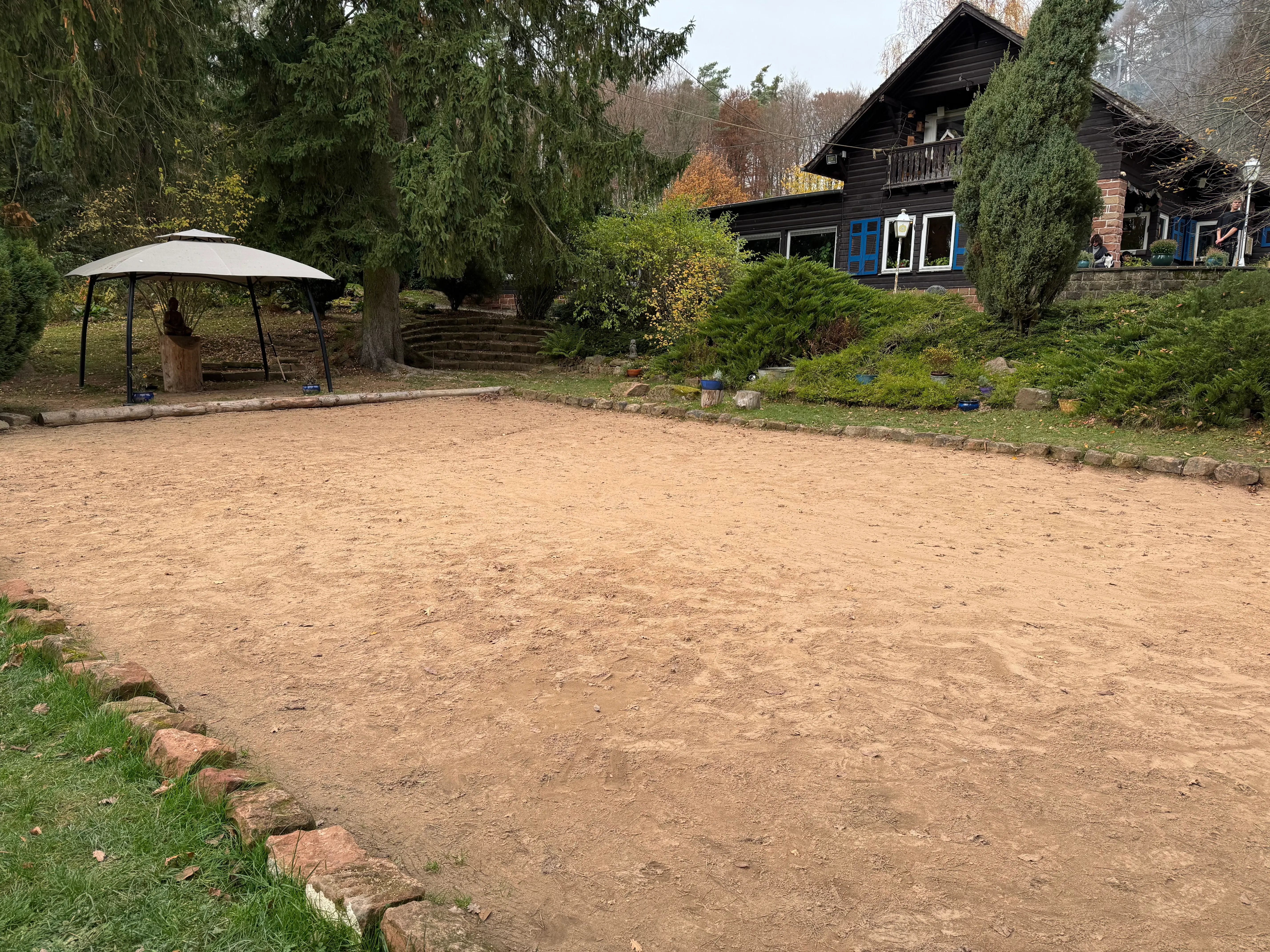
Round after round, we crawled. Occasionally, I’d see blood-red sand on the ground as I fought my way from one side of the training ground to the other. It was a welcoming ceremony written in sweat and grit, and I honestly hadn’t expected a start this intense.
Later, I saw that everyone’s knuckles were raw and bloody. Writing this now, two weeks later, mine still haven’t fully recovered.
After the workout, we moved to dinner.
Silence was mandatory, and before each meal, there was a formal blessing ceremony.
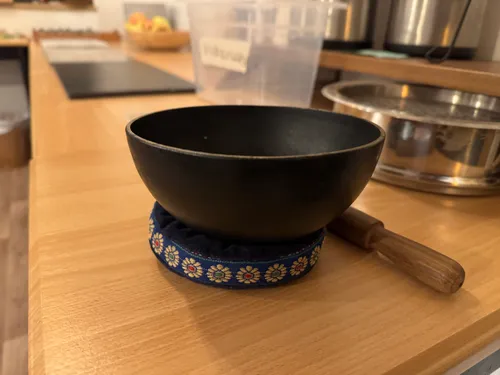
Meal Blessing
All hands together,
gong… gong…., gong…
I think about where this meal comes from and how much effort was connected to it. While receiving this food I remain conscious of my own actions, I pay attention to not be unaware or greedy. I value this meal because it keeps the body and the mind healthy. I receive this gift to serve all beings.
(first the speaker than all together)
(speaker then us): At the first bite we vow to not to bad anymore
(speaker then us): At the second bite we vow to only to good
(speaker then us): At the third bite we vow to save all beings.
(speaker then us): By doing so we complete buddhas way.
(speaker): Banbae (we all bow)
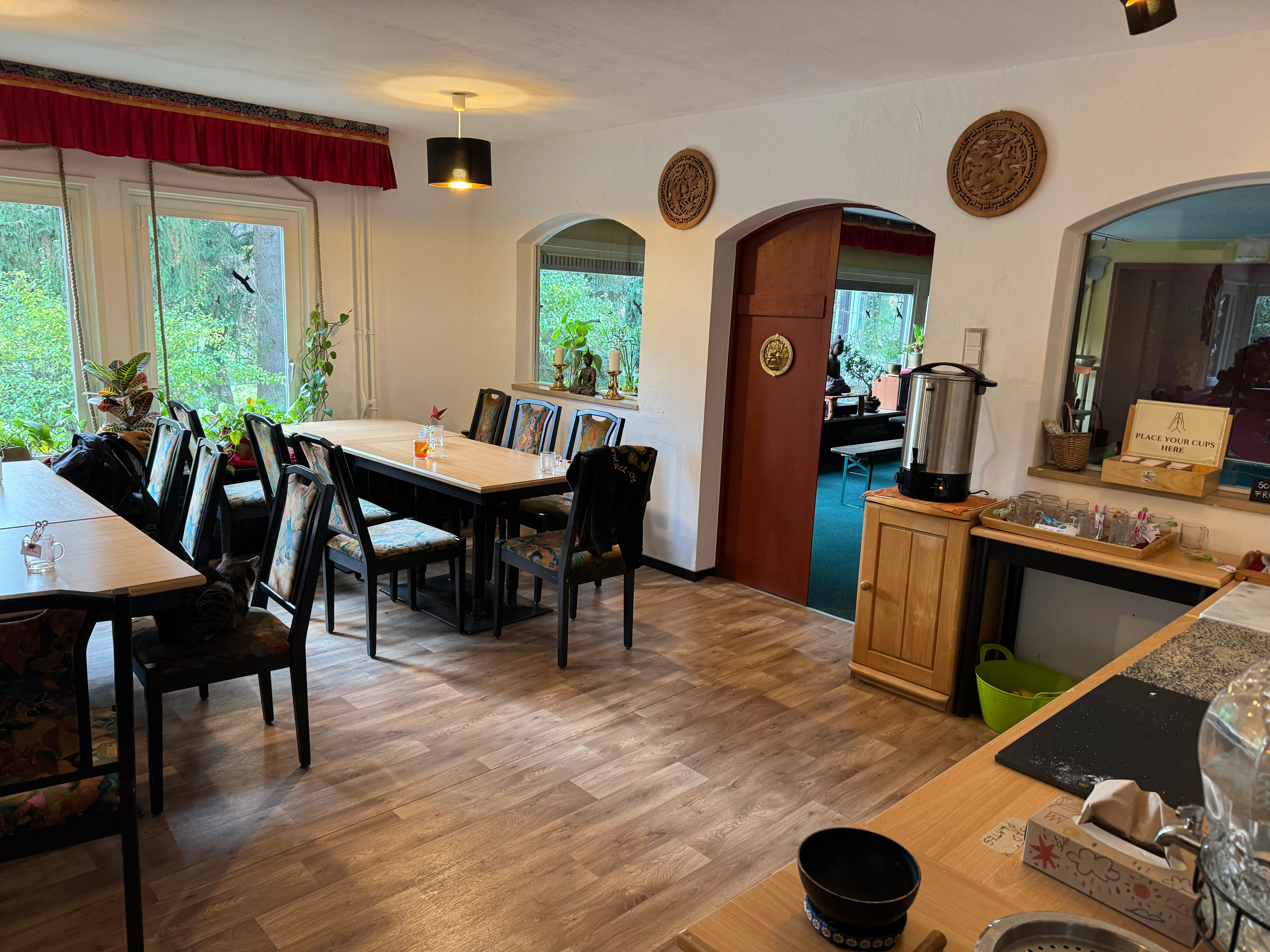
Moreover, there was a strict order of entry: highest-ranked individuals first, and within each rank, lined up by age. On this first day, the disciples entered, followed by the volunteers, and finally us.
However, nobody had told us where to sit or who was older than whom. So we just sat down randomly and waited. And waited.
The room was dead silent. You could hear only breathing and the rustling of clothes. The fresh smell of the food drifted through the air, taunting us. A few of us started chuckling, trying to suppress laughter at the absurdity of the situation.
Nobody wanted to be the first to stand up. Nobody knew if we should wait for age order, table order, or some invisible signal. It became a silent stalemate—everyone starving, but everyone too polite or uncertain to move.
Finally, someone gathered the courage, stood up, and went for food. The spell broke, and the rest of us followed.
The day wound down around 8:00 PM with a Qigong-based stretching session, joined by locals who came specifically for the evening practice. It involved deep visualization exercises, grounding us after the chaos of the day. Afterward, we practiced walking meditation and chanting—this time just us, without the locals.
The day ended in complete silence, a rule that would last until after breakfast the next morning.
Day 2 - Discipline, Wood, and Stretching Hell
I woke up at 5:50 AM. The routine was precise: dress, wake the next person in the room, and head to the dining hall.
- 7:00 AM: Morning meditation.
- 8:00 AM: Breakfast.
The food was simple but comforting—porridge with apple slices, raisins, and coconut flakes, warm and filling enough to fuel what was coming next.

Then came the run. This time, the slowest runners led the pack, setting the pace as we moved deep into the woods. The training escalated quickly: sprint competitions, solo sprints, and, of course, push-ups. Winners did 40 push-ups; “losers” got off easy with 20. Though here, doing more was always encouraged—and many did.
Once warmed up, we focused on a single Kung Fu movement: rotating the arms like propellers. Imagine your upper body as an anchor while your arms remain perfectly straight. It looks and sounds simple, but it isn’t.
This became a recurring pattern I noticed: finding immense complexity in the simplest of things. There are always deeper layers to explore.
We paid for every attempt with sweat and soreness. Round after round of push-ups, jumps, and drills built the foundation for that one motion. Yet, despite the effort, we were miles away from the grace of the monks. We managed to figure out the mechanics, but true mastery remained a distant dream.
Lunch was rice, beetroot, feta, and hot sauce. After a brief one-hour break, we moved straight into “labor time.”
Our group was assigned to woodwork—carrying chopped logs and dismantling old dog huts. But in our enthusiasm, we got carried away. We tore down the roof of one hut that was meant to stay standing. Deep down, I felt a check—a hesitation that said stop—but the act of tearing things apart was primal, instinctive, and satisfying. I let the impulse win.
When a volunteer pointed out that the wood was still usable for other projects, the realization hit me hard. I felt immediate guilt. I had acted without awareness, without discipline—the exact opposite of what this place was trying to teach me. Later, I found him and apologized, owning the mistake fully.
The day wound down with a lighter Qi Gong session (“Heaven and Earth”) and a simple dinner of kasha with warm orange sauce.
But the day wasn’t over.
We gathered in the side room for a session led by another disciple. It started with intense stretching and quickly graduated to partner stretching. This was rough.
Imagine sitting on the floor, legs spread as wide as they can go. Your partner sits opposite, bracing their feet against the inside of yours. They grab your hands and pull you forward, deeper into the stretch. Then, they rotate your upper body—left, right, left—until the disciple finally shouts, “Switch!”
The next torture was worse: soles of the feet pressed together, knees open in a butterfly stretch. Your partner kneels in front of you, pressing down on your knees with their body weight. Sometimes gently. Sometimes… not.
We ended the day with chanting and meditation—a calm, grounding finish to a physically intense day.
Day 3 - The Hardest Morning
I was the first one awake. Bathroom, teeth, magnesium. Routine was becoming instinct.
I dressed strategically: the “onion technique.” No thick jackets, just layers. Two sweatshirts are practical—you can peel them off as the workout ramps up and your body heat spikes. I grabbed my notebook and pen and headed to the dining hall. The room was empty. I started preparing cups for the names I’d already memorized, clipping paper nametags to glass rims.
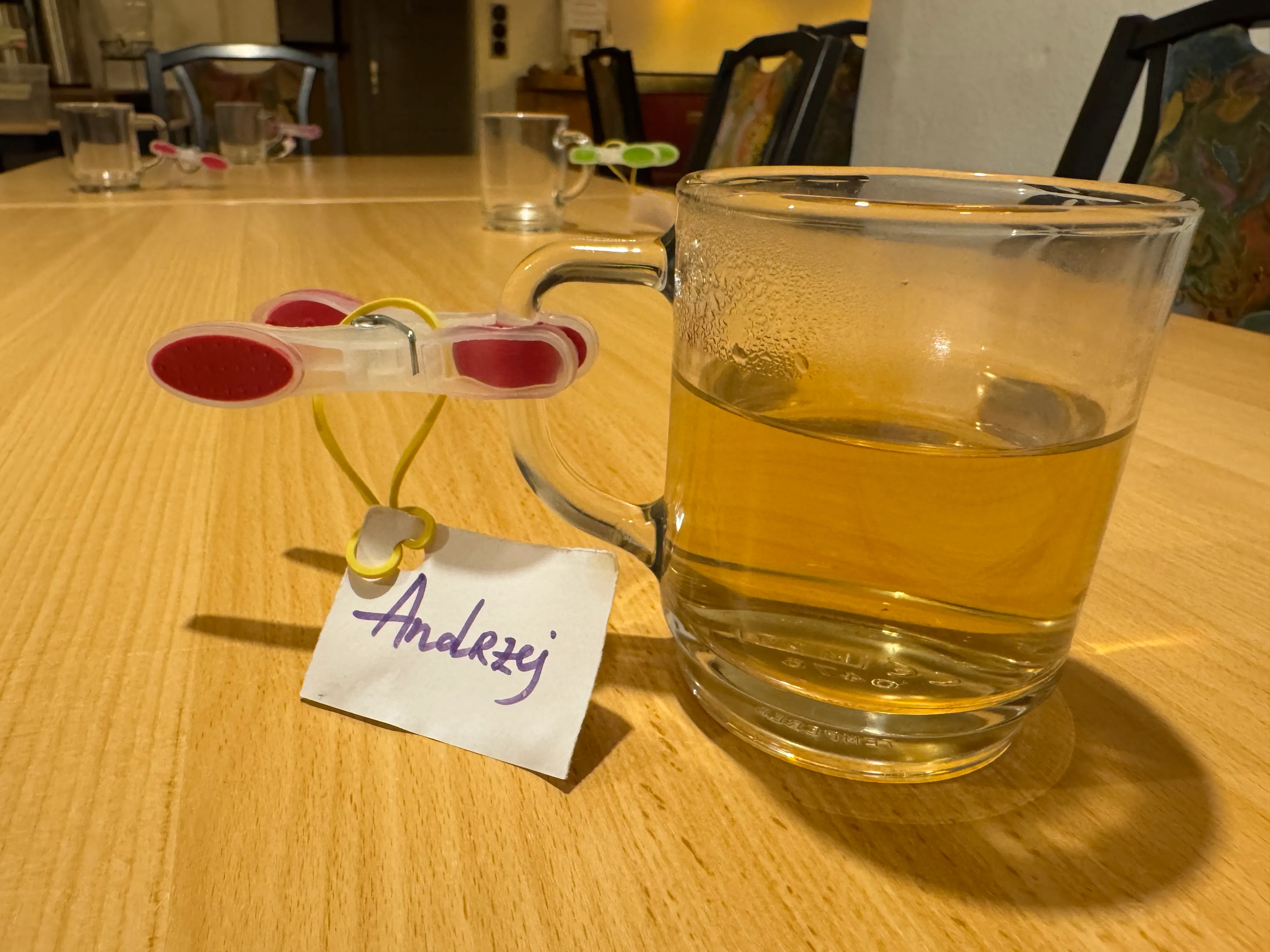
At 7:00 AM: Meditation. One full hour. Eyes open. Absolutely still.
This is mental endurance training. Your body begs to shift. Your legs burn. The silence amplifies every tiny sound—breathing, swallowing, the rustle of fabric. And louder than all of that are the thoughts you can’t escape.
Breakfast followed, marking the end of noble silence.
Morning workouts were always tough, but Wednesday morning was… different. It started deceptively simply: a “relaxed” 3 km run to warm up. We arrived at our destination: a steep hill dominated by a long, imposing stone staircase.
First, we just ran up and down. Then, the intensity escalated.
- Drop into a low squat and jump up the stairs.
- Crawl up on all fours.
- And the worst of them: reverse climbing. Feet on the stair above, hands on the stair below, crawling backward up the hill.
That one was absolute punishment.
There were probably other drills, blurred by exhaustion, but the partner carry remains etched in my memory. You had to carry your partner down the stairs and back up again. I was paired with a bigger guy. I made it halfway up before time was called.
I regretted it immediately. Not because of him—but because of me. I had talked too much at the bottom, hesitated, taken too long a break. I knew I could’ve pushed through, but I didn’t.
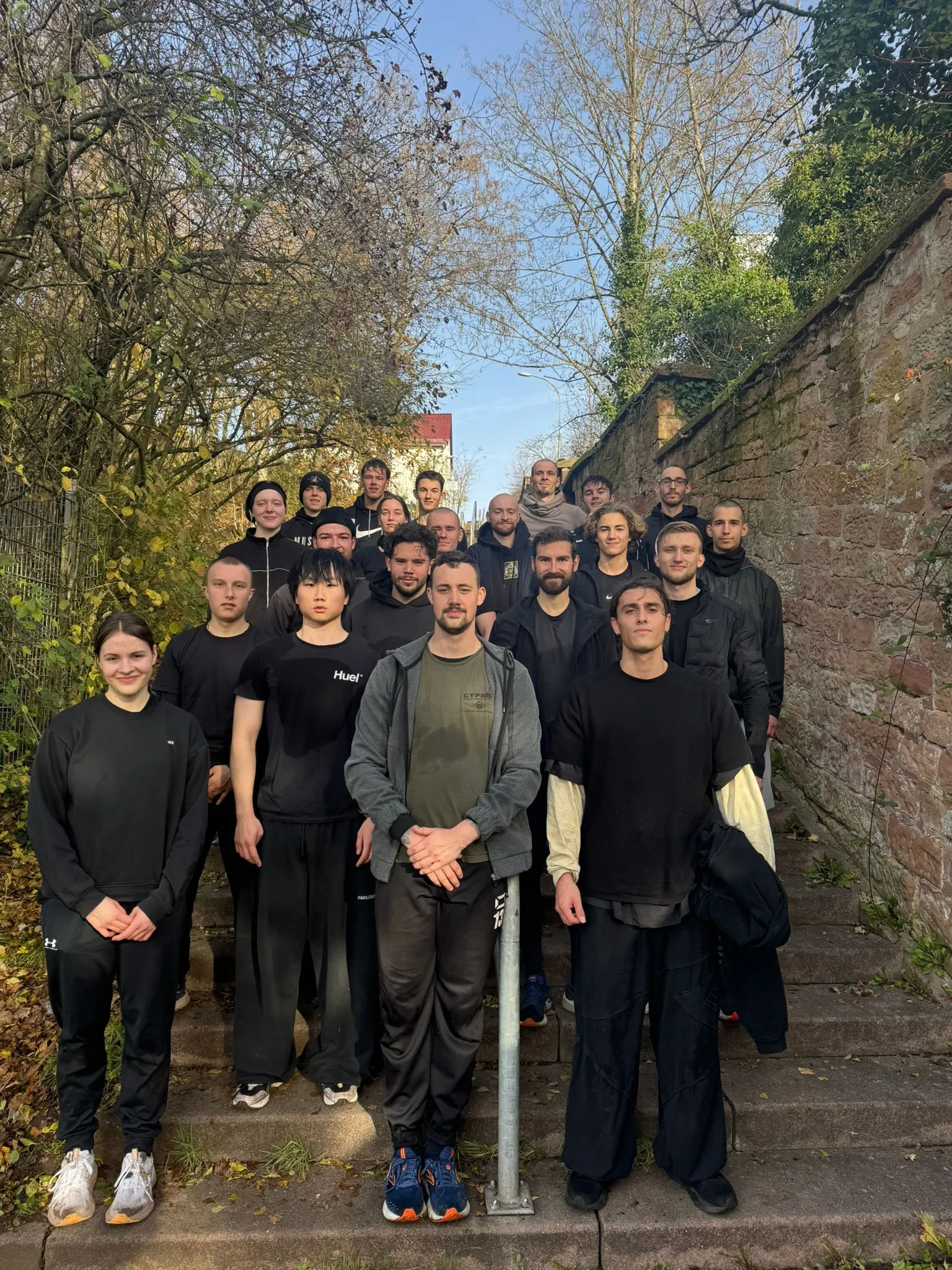
It reminded me of Mabu (horse stance): in theory, you hold it until your legs literally give out and you collapse. But I hadn’t pushed myself that far. Not yet. It was another lesson: the only way to get there is to practice pushing through the discomfort, again and again.
As a reward for surviving the stairs, Laoshi Miao Jian took us to a local bakery where we finished early. Just a few meters away was a water fountain fed by a fresh, cold spring. We drank greedily and dipped our battered feet into the icy water, walking in circles to soothe the inflammation. It was a moment of pure relief—enjoying the water, the conversation, and the simple, vivid feeling of being alive.
I decided to run back to the monastery. For the first time since we arrived, the monastery shop was open. I bought a sweatshirt for €70—an investment for the days ahead.
Working Meditation
After lunch, we returned to work. Our group of ten was assigned heavy lifting: transporting stone tiles. We loaded them into a Sixt truck and unloaded them at the new sports hall. It was hard labor, but surprisingly fun. Justin taught us how to form a human chain to pass the stones along efficiently.
Later, we continued with Qi Gong led by Laoshi Miao Hai. We started outside with back and chest stretches, but the biting cold forced us indoors. The focus was on the body’s “power lines”—generating a punch not from arm strength, but from the entire kinetic chain. You had to relax specific muscles in your legs and core while firing others to channel energy forward. It felt alien, like trying to rewrite your own operating system. But that’s the point: train the body until efficiency becomes instinct. Like driving a car.
We ended the day with dinner, stretching, and chanting:
“Namo Bodhidharma.”
Day 4 - Strength, Stones, and Subtle Power
Morning began again with 45 minutes of meditation. Eyes open. No movement. Just breath, discomfort, and the constant work of awareness. Breakfast followed: oats with dried grapes, sunflower and pumpkin seeds, a bit of honey, and—hidden like a prize inside the bowl—a soft apricot.
After a short stretching session, we moved to the sandy training grounds for forms practice. We were introduced to Shí Sān Quán (十三拳) — “Thirteen Fists.” We drilled the sequences over and over, sand sticking to our feet, the rhythm of the movements slowly sinking in.
Then came the wrestling drills: drawing circles in the sand and trying to push each other out. The goal was to keep one foot rooted while throwing the other person off balance. If your foot moved, you lost. This was a practice in going with the flow instead of resisting with sheer force.
Lunch was sweet potatoes, broccoli, rice, and spicy sauce. I ate fast, needing to squeeze in a moment to check urgent emails. Good news was waiting in my inbox: the company formation back home was moving forward smoothly. A wave of relief washed over me, lightening the rest of the day.
Working Meditation: Stones Again
After the break, it was time for monastery labor again. Yesterday, we had moved heavy stone plates with a small truck. Today, we got an upgrade: a massive Sprinter van.
Yesterday, I had spent most of the time inside the truck, stacking and distributing tiles. Today, my back sent a clear signal: not happening. After one round—and a half-hearted attempt at a second—I switched to the ground crew, simply moving stones sideways.
The final round was different. This time, the truck was filled with trash—pallets, wood with rusted nails, a broken couch, chunks of Styrofoam. Three of us, including me, were chosen to ride with Laoshi Miao Jian and two volunteers to the Wertstoffhof (recycling center) to unload it. The detour made us late for the next session, but nobody minded.
Qi Gong - Finding Hidden Power
Qi Gong with Laoshi Miao Hai continued that afternoon. We started outside with back and chest stretches, but the biting cold pushed us indoors quickly. The session focused on the body’s power lines—generating force not from the arm, but from the entire chain of muscles and relaxed alignment.
It was strange and difficult work. You had to soften muscles you normally tense, engage deeper ones you normally ignore, and channel pressure through the body as if it were flowing through invisible tunnels. Punches weren’t supposed to be pushed forward—they were supposed to arrive.
Dinner was simple and warm: bread and a vegetable soup with potatoes. For the first time since arriving at the monastery, we had bread—a small but welcome change from the usual rice-based meals.
Stretching and Evening Practice
Stretching that night was surprisingly easier than previous days. Maybe my body was finally adapting. Maybe I was just too tired to resist. The extra space in the large Buddha Hall certainly helped.
Then came walking meditation. First, chanting “Namo Guan Shi Yin Pu Sa”, then switching to: “Namo Bodhidharma.”
Afterward, Justin, Kate, Lukas, and I sat together drinking tea, laughing, and talking until the evening settled in. When Kate drove home, Justin and I weren’t ready to stop. We found Arun and asked to continue training.
He suggested handstand push-ups against the wall. I managed eight. Took a break. Then squeezed out two more. Arun did something like ten… rested… and then rattled off another ten.
Eventually, I returned to my room, grabbed my phone, and stepped outside the monastery grounds to call my girlfriend.
What an awesome day…
Day 5 - Forest Run, Tea Wisdom, and Evening Combat
The morning started with a forest run. David, nursing an injury, followed on a bike while the rest of us ran in pairs. At one point, Mina grew dizzy and had to stop; Justin stayed behind with her to make sure she was safe. I waited at a few junctions to guide them, but eventually, knowing the path, I jogged back down to meet them. The three of us walked the rest of the forest road together.
It was a stunning late-autumn morning. The air was crisp, the trees nearly bare, their leaves carpeting the ground. As we crested a slope, the landscape shifted dramatically—from dense forest to a sandy hill biome that felt like a different world entirely. Chris, who plans to become a disciple, was waiting for us at the border where the trees gave way to sand.
About 700 meters further, atop the next hill, the rest of the group was already training. Laoshi Miao Jian was improvising on the “13 Fists” form again, adding dynamic, combat-focused movements—jumps, sweeping leg circles, and takedown kicks.
We wrapped up with a relaxed group discussion and Q&A. The walk back to the temple was easy and open. No rushing, no pressure—just genuine connection.
Lunch & Work Meditation
Lunch was waiting when we returned: tofu pumpkin curry with salad. Afterward, we dispersed for work meditation. Some of us broke down old pallet constructions, others winter-proofed the rose bushes with layers of leaves, while others tended to the compost or cleared debris from the gardens.
Tea Ceremony and the “Someday Tea Master”
The highlight of the afternoon was a proper tea ceremony with the “someday tea master.” Despite his profound knowledge and evident mastery, he humbly insisted we couldn’t call him a “tea master” yet.
According to him, a true tea master is someone who has dedicated their entire life to the craft and then passed away—only then does their soul earn that sacred title. For us, though, sitting there in his presence, he was already a master in every way that mattered.
We sat in silence as he prepared the tea with meticulous care. It took two kettles to serve the whole group, the ceremony unfolding in slow, deliberate rounds.
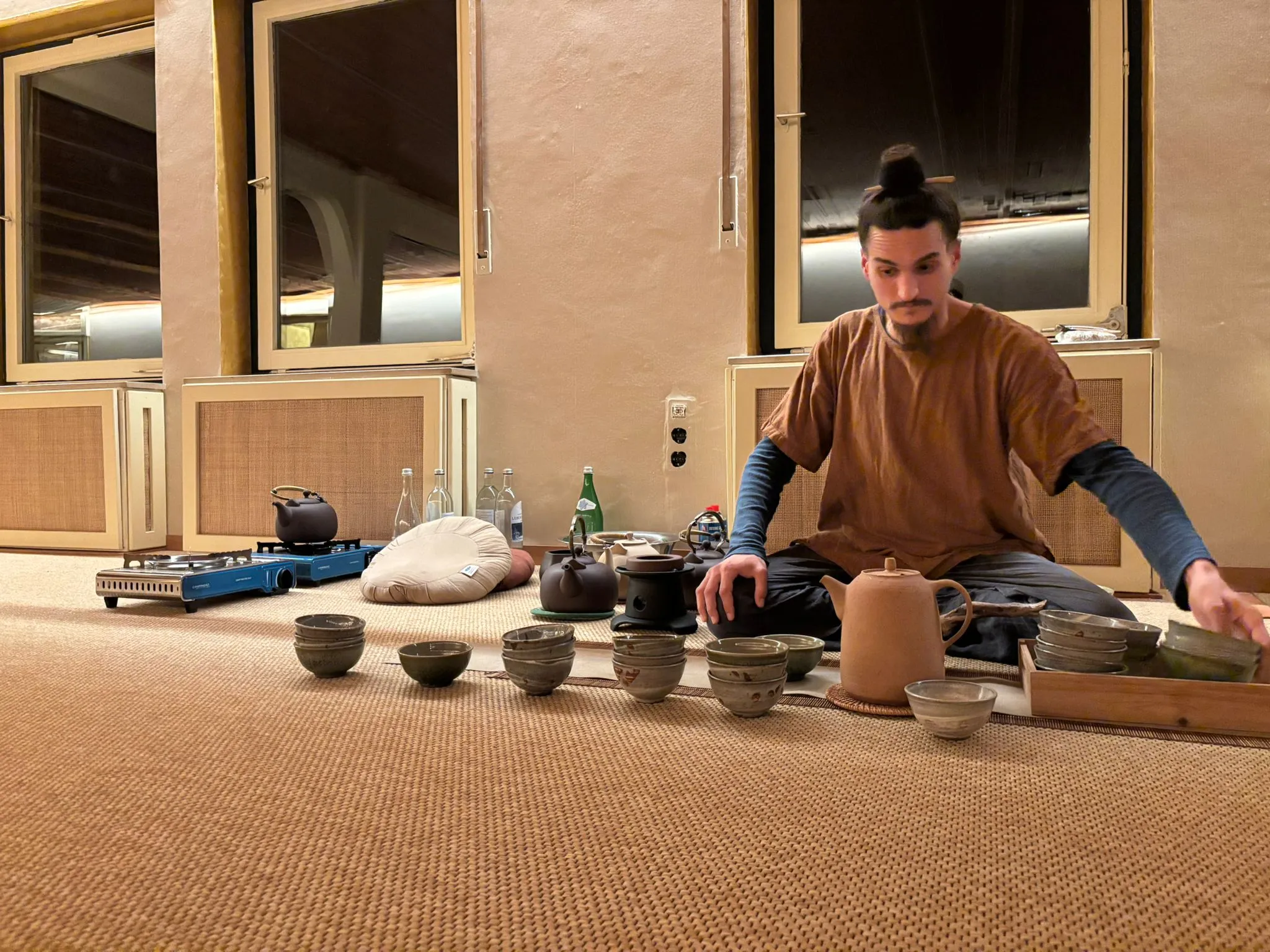
In the breaks between servings, the silence lifted. He spoke about tea with a deep, evident love—discussing tradition, fermentation, and philosophy.
“Tea makes you wiser,” he said with a grin. “But some people drink a lot of tea and still stupid.”
We laughed. His energy was unmistakable—sharp, wise, and refreshingly human.
Evening Training With Shifu
After tea, we piled into cars and drove to a separate training hall to practice with Shifu—the master who stares at the floor like he’s ready to shatter it with his gaze.
He taught us practical, high-intensity techniques: how to escape holds and take an opponent down while staying in motion. It was effective and direct.
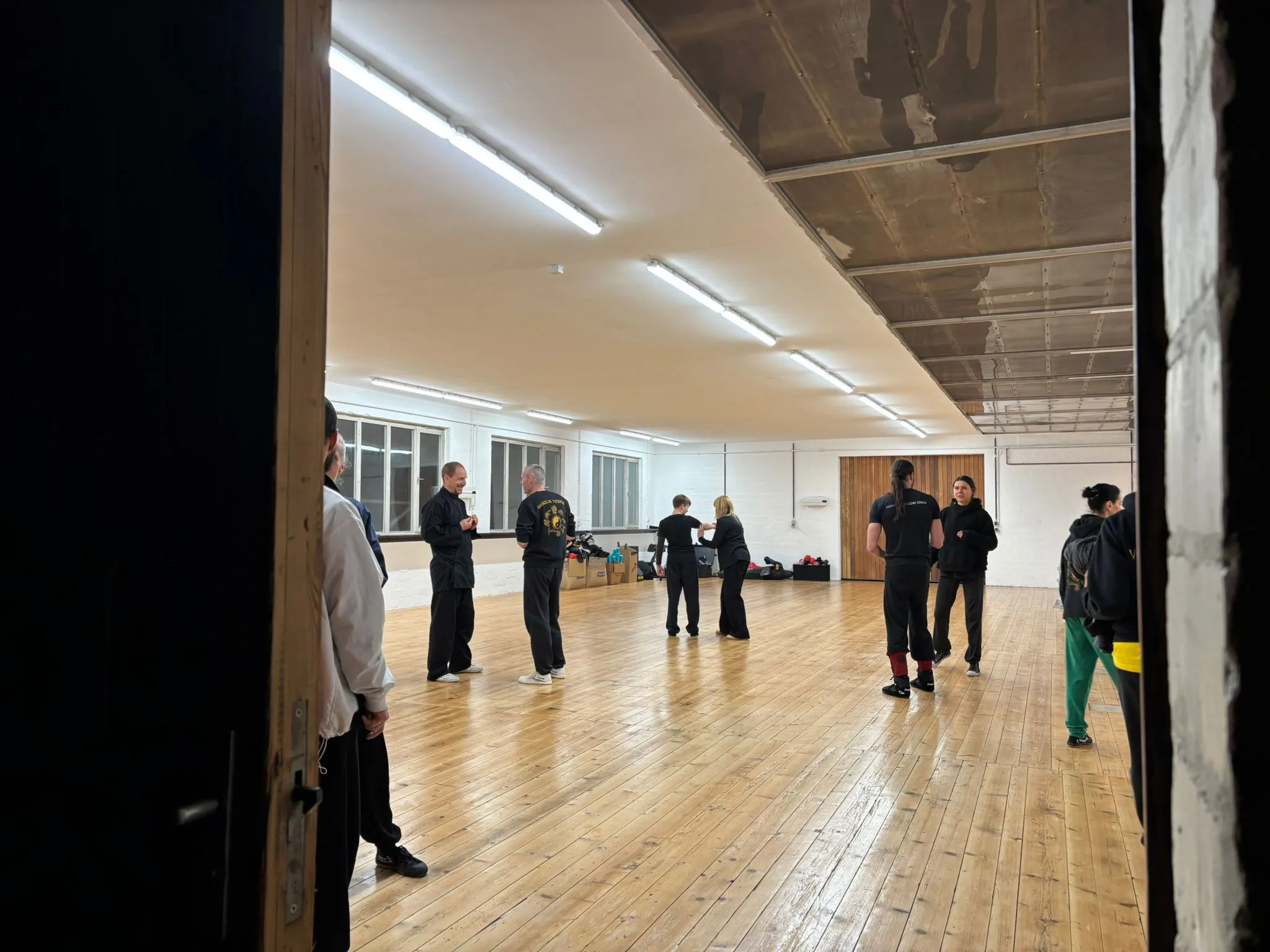
Back at the temple, Lee led the evening ceremony. The volunteers surprised us with cake—a rare treat. Afterward, nobody wanted to leave. We stayed around to talk, practiced ground fighting, and played with Shaolin weapons like the staff.
Day 6 - The Last Push
The next morning started at 5:00 AM with optional training led by one of the volunteers. It was pitch black when we gathered outside. We started with stretching to wake our stiff bodies, the coach’s voice cutting through the dark with cryptic, intense commands:
“Break your breathing. Climb the hill with your mind. Don’t stop.”
Then he took off—fast—and we had no choice but to follow. We chased him up the hill, a chaotic stream of light and shadow. Some people had flashlights, others used their phone screens, and some just ran blind through the night. He ran us up the hill, then further, then back again… and just when we thought it was over, he added a sprint section to finish us off.
By the time we reached the training ground, we were already exhausted. But it wasn’t over.
We dropped into Mabu, the horse stance, and held it until the pain screamed. Then came stance work: basic punches. They looked simple, but the coach showed us just how wrong we were. He walked through the ranks, correcting our posture while we burned in the hold.
Then came kicks. Hands stretched toward the sky, fingers pointing upward, chest open.
Step → Stance → Kick, Kick, Kick, Kick.
Then the next person stepped into the sand and repeated it. Over and over.
The Hardest Meditation of the Week
Physically spent, we sat down for meditation. It was the hardest session of the entire retreat.
Somewhere in the back, David fell asleep. First came the soft, rhythmic “sleep breathing”… and then, for a brief, glorious moment, a full snore.
It took everything in me not to explode into laughter. Every time my mind drifted to the sound behind me, a huge grin spread across my face. At first, I even chuckled quietly. Maintaining composure was a battle, especially since I was sitting in the first row—directly in front of the disciple.
Breakfast
Breakfast was porridge again—but this time, they had eggs. My energy lifted instantly. Proper proteins!
We chatted and didn’t fully respect the noble silence, which technically still applied during the meal. But the mood was light, relieved. We had made it.
Final Training & Ceremony
The last session was subtle and precise, focusing on opening the spine and moving the arms through the fascia. One student was actually kicked out of class for interrupting and talking—a sharp reminder that discipline applied until the very end.
The instructions were internal:
- Sink the tailbone.
- Stand mainly on the front third of the foot.
- Expand the spine.
- Move from the pressure between the vertebrae.
It was deep, internal work.
Then came the closing ceremony. Five people stood in a line before the Buddha statue. One by one, each person stepped forward, held a single intention in mind, and bowed.
And just like that, it was over.
Some people drank one last cup of tea. Others rushed off to pack. I managed to say goodbye to a few, but the group dissolved quickly.
The Journey Home
I got a ride home with Max, who was driving toward Munich and offered to drop us along the way. Paul, Leonie, and I joined him. The trip was its own little adventure - we talked about the retreat, laughed, and even did push-ups on a highway parking lot. Leonie and I ran laps around the parking lot for fun.
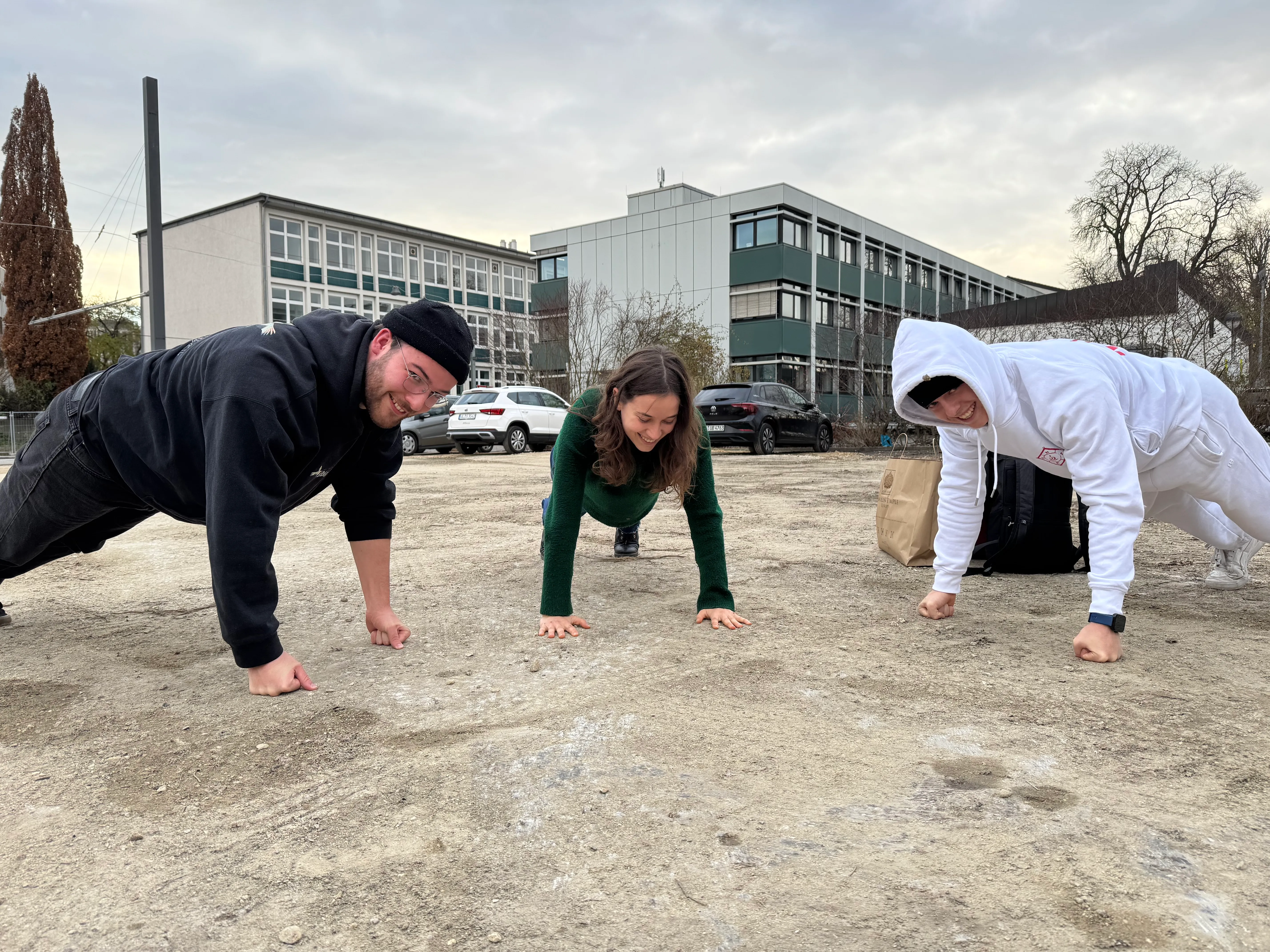
Paul got out in Ulm, I in Augsburg, and then the group scattered again.
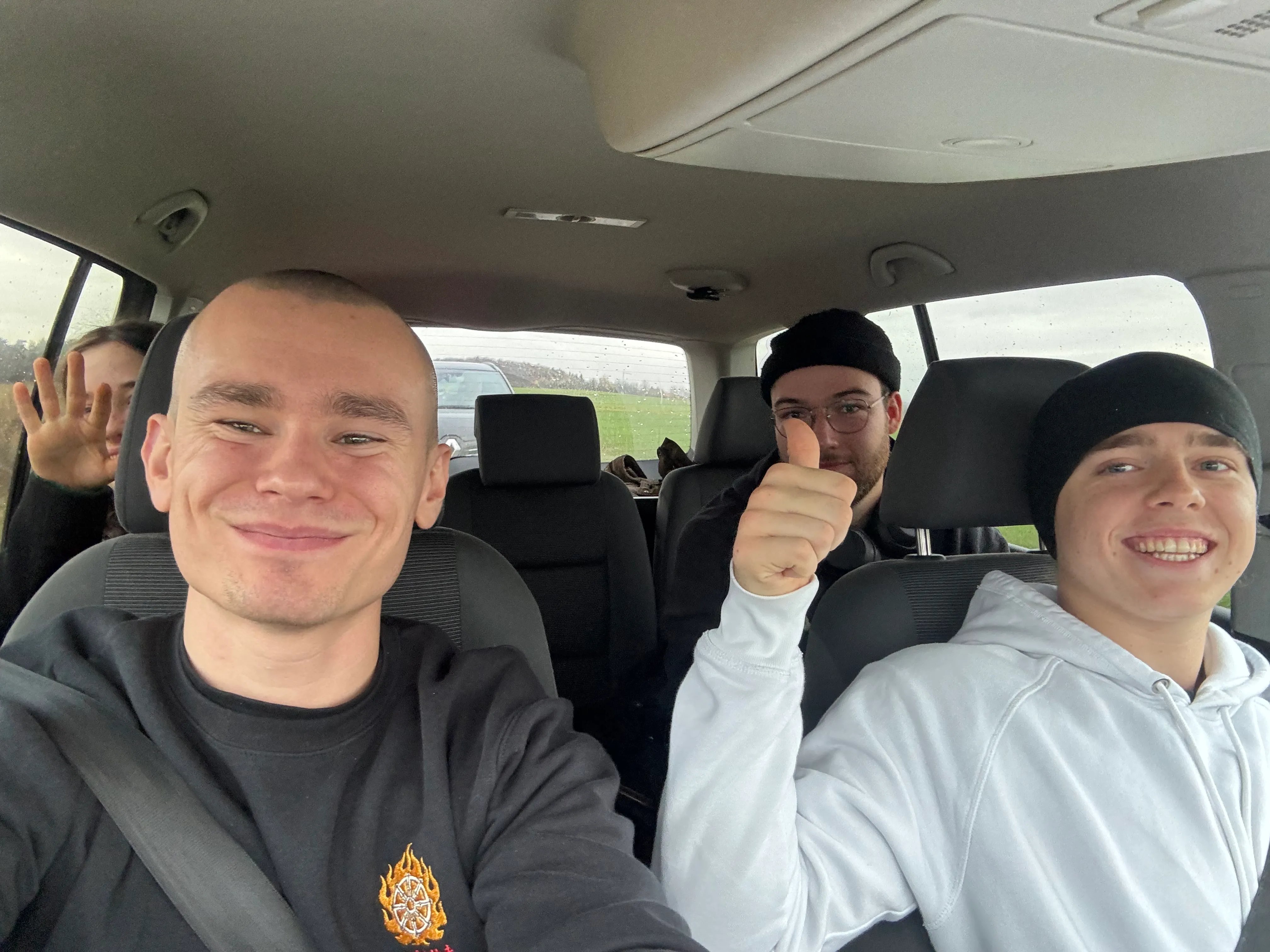
Something begins. Something ends. This week at the Shaolin Temple Europe was incredible - intense, painful, funny, grounding, and unforgettable.